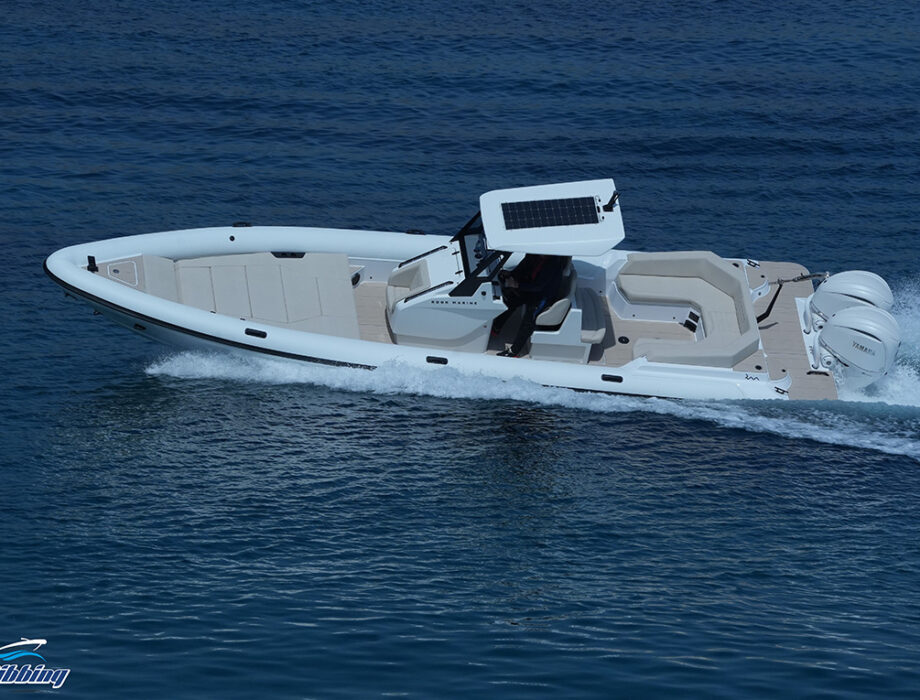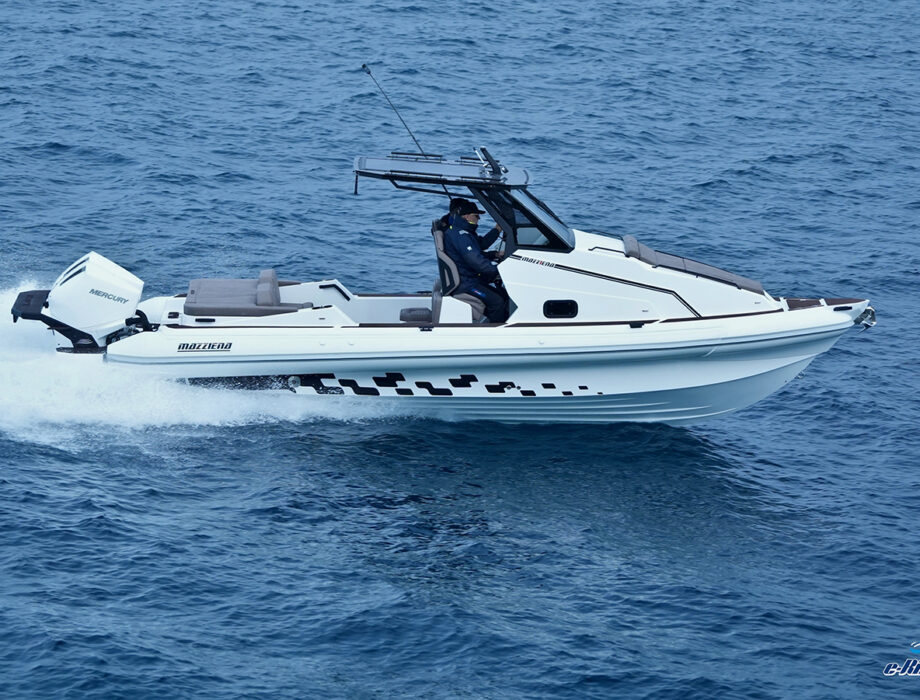

Top Line S 22 – Νew Υamaha 2.8L F200G

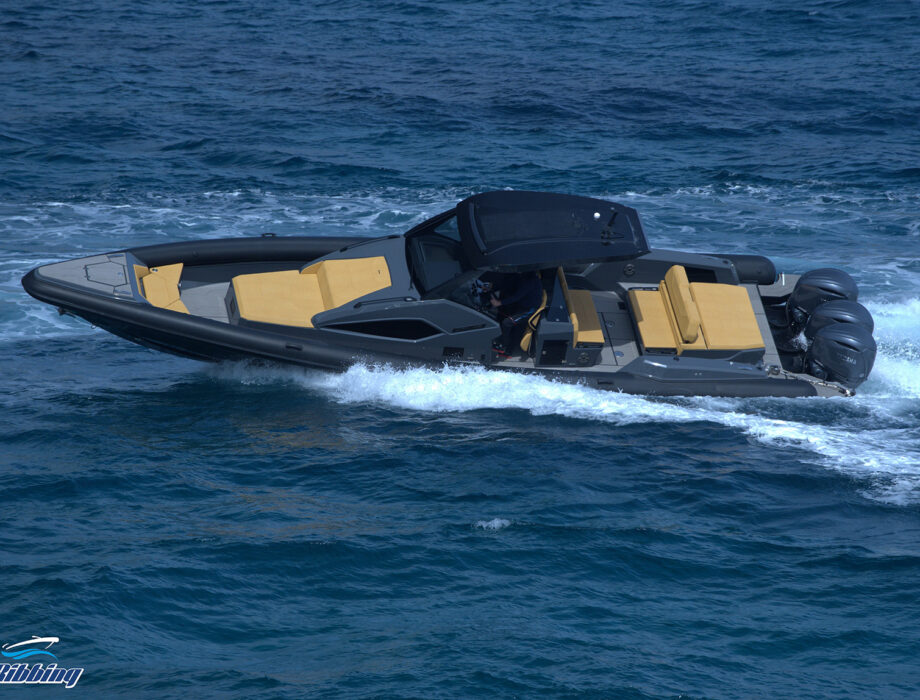
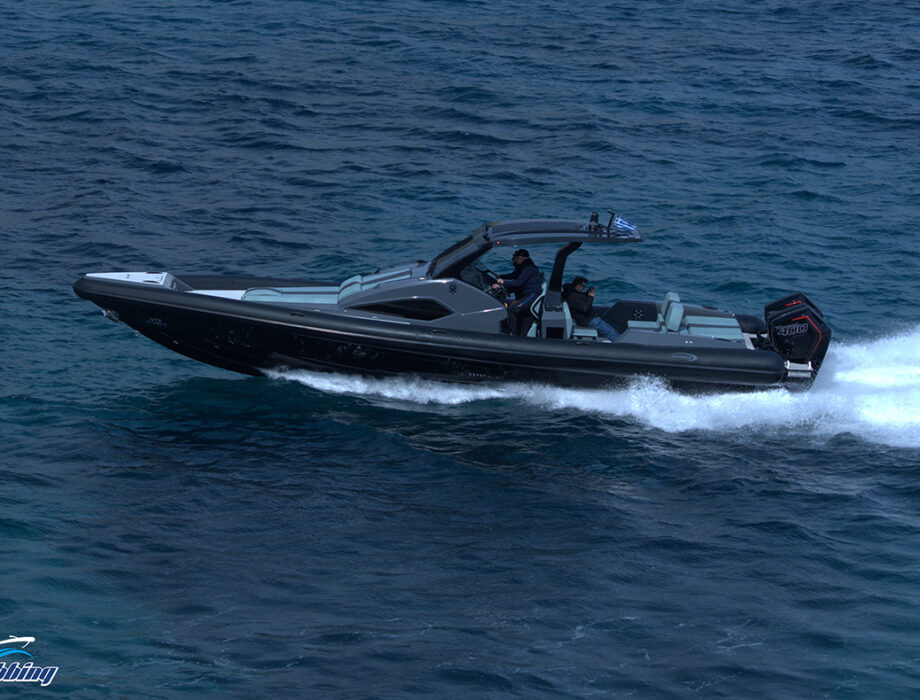
Top Line Corsair 33 – Twin 5.7L V10 350hp Verados
Top Line S 22 – Νew Υamaha 2.8L F200G
Top Line Corsair 33 – Twin 5.7L V10 350hp Verados


RIBCO Venom 30 - Twin F200G Yamaha’s
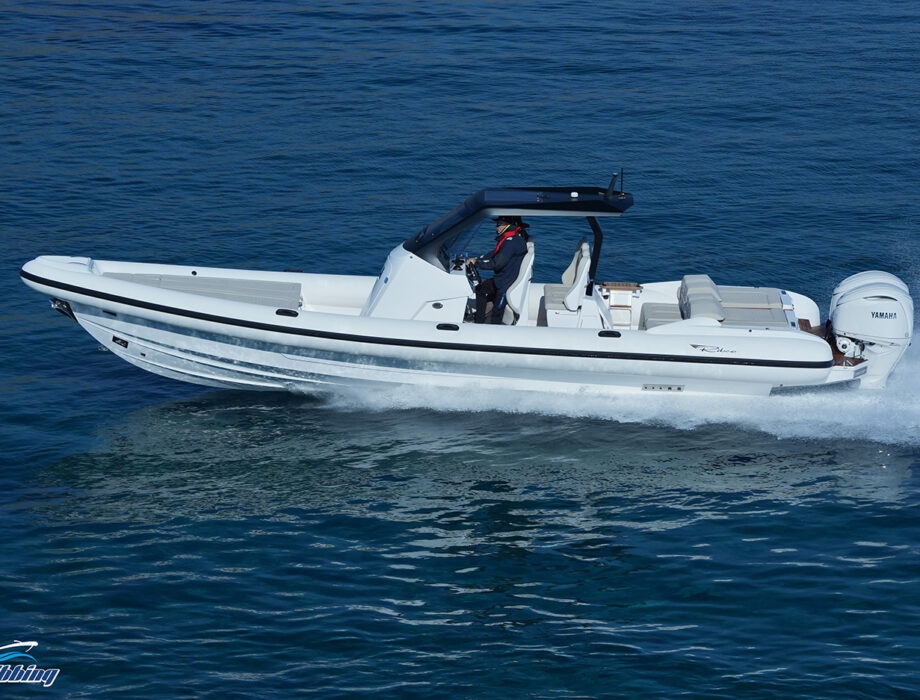
The excellent build quality, the luxurious aura it exudes and the wonderful off-shore features are just some of the features of the newest model of Venom family. Venom 30, which is the replacement of Blade 30, runs on a new hull characterized by the presence of two ventilated steps, is particularly seaworthy and fast, while offering all the comforts we need at sea.

Her deck is also new, with particularly large spaces for its class. She has a generous bow sundeck, separate toilet area, carbon fiber T-Top, a two-seater settee that faces aft and hides the boat's refrigerator underneath, and an aft four-seater settee. Venom 30 can be fitted with a single engine of up to 450hp or a pair of two engines with up to 2 x 225hp.
You can see the detailed presentation of the boat at the following links: https://www.e-ribbing.com/el/ribco-blade-30-twin-suzuki-df200a/ and https://www.e-ribbing.com/el/ribco-blade-30-twin-mercs-3-4l-225hp/.
Our test Venom 30 had two new Yamaha 4-cylinder engines mounted on her transom, which can boast that are the lightest four-stroke outboards in their class.
The new F200 has a very limited volume and a completely renewed and elegant design, weighing 56 kg less than the existing 200hp while being only 6 kg heavier than Yamaha's 200hp HPDI two-stroke.
This means that we can replace our HPDI engine with the new F200 which is more environmentally friendly, without affecting the balance of our boat at all which is a determining factor in the ride quality.

The innovative 200hp 4-cylinder outboard comes with a host of features such as an outstanding EFI system, microprocessor ECU and variable camshaft timing that improve performance, while the new integrated steer-by-wire steering system offers more precise and smoother handling function raising our travel experience to a very high level.
The new outboards with electronic controls now feature integrated electro-hydraulic steering (EHS) which ensures a clean, spacious bilge without pumps, hoses or control units, resulting in more clear surface on board, a neater appearance and of course a huge reduction in work and additional costs.
Yamaha's exclusive TotalTilt™ function with built-in tilt limitation system allows the engine to be fully raised or lowered from any position by simply double-pressing the respective tilt button, during which the corresponding buzzer sounds to alert the crew to stay away from the outboard. It is also worth mentioning that there is a handy button on the tachometer, which allows us to increase the engine speed by 50 rpm, up to the 900 rpm range, which will be especially appreciated by fishing enthusiasts.
As with the larger V8 and V6 models, the 200hp 4-cylinder has also adopted Yamaha's excellent SDS (Shift Dampener System), which is patented and reduces the ‘clunk’ sound normally associated with moving between gears.
At Sea
The lower units of the F200 engines were turning the Yamaha’s 3-blade 15΄΄x 20΄΄ stainless steel propellers with a gear ratio of 1.86:1. With 250 liters of fuel, 3 people crew and all the equipment of the boat we went out of the Anabyssos bay and started recording our measurements.

The Rib was planning in 5.5 seconds, standing on plane at 2200 rpm with 11 knots, while accelerating to 30 knots in 10 seconds.
The throttle response was immediate, with the exception of low rpm where it was clear that the propeller we were wearing was "losing" its water. After all, it was the first test, we didn't know anything about the specific set-up and I was trying to feel the behavior of the propellers in relation to the specific stepped hull.
At 3000 rpm we were cruising at 21 knots burning 1.8 liters per nautical mile, recording the most economical cruising speed, as at 3500 rpm we were running at 29 knots.
At 4000 rpm we were running with 34.5 knots with consumption reaching 2.02 liters per mile, while at 4500 rpm our speed was 39 knots with the engines "drinking" 2.05 liters per nautical mile.
At full throttle, Venom 30 reached a remarkable top speed of 50.2 knots with the engines revving to their maximum limit, showing us a seemingly perfect set-up.
You can see our measurements with the 27'' propellers in the following
However, a closer look at the table of measurements in combination with the feeling we got, clearly show us that the specific boat-engines-propellers combination needs significant interventions which mainly concern the choice of a different propeller.
The lag that was obvious at 3500 rpm and gave us the illusion of high noise, combined with the high slip values we recorded, indicated that this particular hull needs larger propellers to become more efficient and the engines to improve their numbers.

It is therefore necessary to go to larger diameter propellers which will greatly improve the throttle response and acceleration, keep the boat on plane at lower rpm, while increasing cruising speed at midrange with an immediate and significant reduction in fuel consumption.
Another important advantage is that they will give us more power at low speeds, a fact that we will especially appreciate when traveling in bad weather conditions.

Manufacturer:
RIBCO Marine
178 Ag. Marinas-Koropiou Ave,
19400 Koropi
Τel.: +30 22910 90800
Fax: +30 2291092159
email:sales@ribcomarine.com
www.ribcomarine.com